Keep Your Studio in Business: How to Grow a Music School Location with In-Home Services
Learning how to grow a music school – and maintain a pristine music education product – is a lofty challenge that has been made more difficult by the changing culture and technology in our industry.
Brick and mortar music studio locations, specifically, are facing more challenges than ever before with establishing their presence and competing with new mediums for lessons. This trend is only growing larger with virtual and on-location programs taking center-stage since the pandemic.
Hope is not lost for community music schools, though! How do you make increasing music school enrollment possible?
By adding an in-home lessons service offering to your program that works with your on-location facility, not as a competing offering, you can expand your revenue stream with literally NO overhead cost.
The in-home lessons are more lucrative for teachers and owners, as well as very connected by travelling to the students’ space. And yet, the studio lessons are more cost effective for the student, convenient for the staff the school relies on, and connected to a community.
Putting the two together – under the right circumstances – can be magic for your school. The key to success is having knowledge of the in-home space and an understanding of how the two mediums can complement each other, as well as improve your teacher and students’ experience (i.e. customer experience).
How do I know so much about music studio business growth?
In case you are not familiar with my career, I launched and developed a “mega-music-school” in the Mid-Atlantic region of the East Coast that taught over 800 students per week at its height, and in my final years with this organization. A staff of around 85 teachers gave these 800+ lessons, averaging around 8-10 students per instructor per week.
What made this quantity of students and unhindered growth possible was where we gave these lessons – we only offered in-home services.
The fact that we could teach music lessons all over the Washington, D.C. and Baltimore metro areas by building student rosters where our teachers already lived and worked created this uncapped growth potential. The geographical reach and extended audience gave us the ability to grow an enormous base.
As a music education nerd, finding ways to maintain the quality of the lessons and create impactful educational experiences for our students was always front of mind, but admittedly, a challenge.
Offerings like our Honors Recitals helped with keeping the musical side constant for our program, but we were always hard-pressed to be able to do more than offer our recitals for – almost exclusively – solo performers.
Without a physical space, amazing ideas – like starting a student-chamber group, hosting rock recitals, and other enriching experiences for music students – were even further out of reach, unless we partnered with a school and developed an offering for their specific program.
“Is having a brick and mortar music school the wrong choice for revenue growth?
Absolutely not, and please don’t give up! If you are a music-school owner and numbers are declining, or never took off, we are about to turn that around for you. But first, we must speak to your merits as a venue for music lessons.
There is a vital MUSICAL reason you exist. Community music education – we hope – will always be important. Traveling TO your teacher is the way most of us current music teachers took lessons when we were students ourselves. Virtual and in home formats are the newer ways of giving lessons.
Brick and mortar schools will always be important, because of the simple fact that not all music teachers want to travel to teach – especially the great ones. They don’t have to. As a physical music studio that gives lessons, you are these teachers’ space for teaching, and they need you.
Truly, it’s the instructors who dictate the lessons market, and serious music students will always go where the best instructors go. Fact. Quote me.
For example, in the Washington, D.C. area, the Levine School is an institution and known as the best of the best – and for good reason! You have to have a master’s degree in music to even apply to teach there. This standard of excellence is going to attract the best students too, because they care about achieving the greatest success at their craft.
And yet, we can’t all start out as an institution like the Levine School and have the type of reputational draw that keeps their program full and expanding. As music school owners creating an effective space to learn, we have to create our reputation as a school through excellence. Brick-and-mortar schools have the advantage on that type of brand development over in-home studios by a landslide.
Challenges for in home music lesson providers
In the in-home lessons world, so much of our time as administrators is spent keeping everyone connected on the logistical details, the bookkeeping, and uniting the staff. We do not have a central location where we are seeing teachers regularly, and this lack of oversight presents a huge challenge.
This challenge eats away at our available time, so as in home music school administrators, we are inundated with the paperwork, as well as becoming logistical geniuses with teaching routes to students. We have less time for true music education development.
The lack of a central space will also limit the number of ensemble programs, performances, labs, and supplemental offerings a program can create for its students, which is unfortunate. These collaborative opportunities are why many music students are taking lessons in the first place!
Creating an in-home music lesson program for music schools
The good news is that we end up with a “grass is always greener” situation between in home programs and physical studios that can be merged into a more robust musical offering. But how do the two intertwine?
Becoming a local authority on music education requires opening yourself to the possibility of running a program that centers on your school, but is not contained within it, and this is the first idea to embrace in conceptualizing the in-home component of your program.
Your location becomes a home-base for your offering and brand, but the number of students you can serve in your company doubles and triples.
How does the mobile music lessons business model work with a music school location?
A major factor in the music lessons business that influences everything we do is the school year. This goes for both in home and studio music schools, but the latter is hit much harder by seasonal shifts than in home. Working together, though, the two can help with bridging student retention gaps between seasons, which is huge.
When students are going out of town for the entire Summer, they are more likely to unenroll from studio lessons. Or even greater – it is common for studios to have pre-defined contract terms for lessons where they naturally come to a close.
By contrast, in home lessons do not have as many school holidays, schedule changes, or other commitments to work against that cannot be resolved between the teacher and family, so this leads to longer retention rates across school years and natural seasonal dips.
However, there is another point of attrition that can occur: students are more likely to unenroll when conflicting activities and logistics do not work out with their preferred teacher. That teacher is often limited by their travel route and spaces available to make changes, which forces the relationship to stop. The logistics can get in the way of good lessons, unfortunately, but there is a solution for many schools.
Offering both in home lessons and studio lessons to students gives them flexible options to re-work the way they meet with your school, rather than seeking out different programs to provide the type of scheduling arrangement needed.
Case Study: How offering in home lessons helped a private school’s enrichment program grow

The connection between in home and in studio lessons – and how to grow a music school by combining these different venues for instruction – first made sense to me when I was working with a private school’s afterschool program in Northern Virginia (major suburb area of Washington, D.C.).
The starting point: how our afterschool music lessons partnership worked
Our in-home music lessons program was hired on to be this private school’s vendor for afterschool Piano and Guitar Lessons. We would supply the teachers at specific times, curriculum, and approach. They provided the students and facility.
We served that school for literally a decade, and it functioned very much like studio lessons. Our teacher is in an on-site music room at the school, a student comes in for a 30-minute music lesson, then 30 minutes later, another student comes in for their session, and so on.
The lessons were always very popular with the families, though most parents only saw us at the bi-annual showcases. And each semester for the first 6 years, we had an average of 12 sign-ups for the 15 spaces we made available.
Not perfect, but we counted it as a success to get a batch of 12 lessons at once…and in one place for the teachers serving the program.
The unfortunate part was the seasonality for us. Unlike our in-home school year of 48 weeks available for lessons, this school program only had 30 weeks of the year booked with us, which meant we were losing out on 18 (!) weeks of revenue by comparison.
That is over a 1/3 loss of the year for our teachers on available lessons to earn income. Not to mention – we had originally established a price break on our normal tuition for the school, due to the lessons being on-site.
For many years, we considered this school program a passion-project more than a revenue-driver. And it truly was a program that our teachers loved, which made us love it more. Sometimes, the musical value of the work you are doing leads you to keep doing it.
How a request for Summer lessons made an afterschool lessons program more successful
But all that changed one summer. After an end of year showcase before school let out, a parent came up to me after the performances to ask if there was any way they could schedule in home for the Summer. They didn’t want to lose the momentum the student had gained from the lessons that school year, and they knew the school’s vendor (yours truly) provided in-home.
I cleared this with the school and arranged the fee structure, and we enrolled that student – as well as 3 others that first year – for in home lessons during the Summer break.
Everyone benefitted from this addition. The same teachers for the school program taught the Summer lessons, and for me, this was the biggest win. The teachers of our in home lessons are who I represented.
This extra income mitigated the seasonal income gap that typically happens in Summer to be more in line with our fluctuations for the normal, in-home lessons.
The school made unexpected profit for their afterschool program without expecting it, and my own organization did too!
The surprise growth-benefits of adding in home lessons over the Summer
When we got to the new school year, though, each of these families called us as soon as after-school lessons enrollment started to cancel their in home sessions. 100% went back to the school that Fall.
Of course, the added revenue and continuity for the teachers was wonderful, but there was another side effect we were not expecting: that next year, and the year after, our sign up numbers steadily increased for each term.
These Summer students were staying on with the program for years, rather than starting at the school for a year and finding a private teacher once the semester ended, because we bridged the seasonal gap with the in home lessons.
The kicker is that none of these families were interested in keeping in home lessons while school was in session, though. Otherwise, there would be a different conclusion to this story. The fact that all the families consistently wanted school lessons on site when available means that in home would not have worked year-round to serve these students, and they would have been unreachable for my main program.
It is the synthesis of the two ways of meeting that creates the long-relationship and consistent referral back to the program for new options.
And the music teacher in me has to mention – it was truly moving to see how much the long-term students of that program grew through these school-lessons by being able to continue forward in the method.
The success metrics: combining in-home lessons with on-location lessons
Comparing our initial 6 years average of 12 students per semester and no Summer lessons with the 20 students per semester we had enrolled per year in the final years, we saw a leap in success.
Our revenue increased over 60%, and our student retention sky-rocketed with over 50% of students signing up for lessons in multiple school years.
In home music lessons enhance group music class offerings
Another major area of opportunity with adding an in-home service to your music school’s offerings is around group classes and retaining these students for the course of their music study.
For example, group piano lessons are a sought-after format for young beginners. Parents are seeking opportunities for both socialization and to “see if my child likes it” before investing in the more expensive in home lessons.
After leading scheduling conversations for over 15 years to coordinate my program’s in home lessons, I cannot tell you the number of times a parent of a 4 or 5 year old told me, “I think we are going to try group classes before we try in home, but if we like it, we will definitely go with you guys!”
Or, “we were doing group classes for the last year, and my child really liked it. We think it’s time for him to get more serious and start lessons at home.”
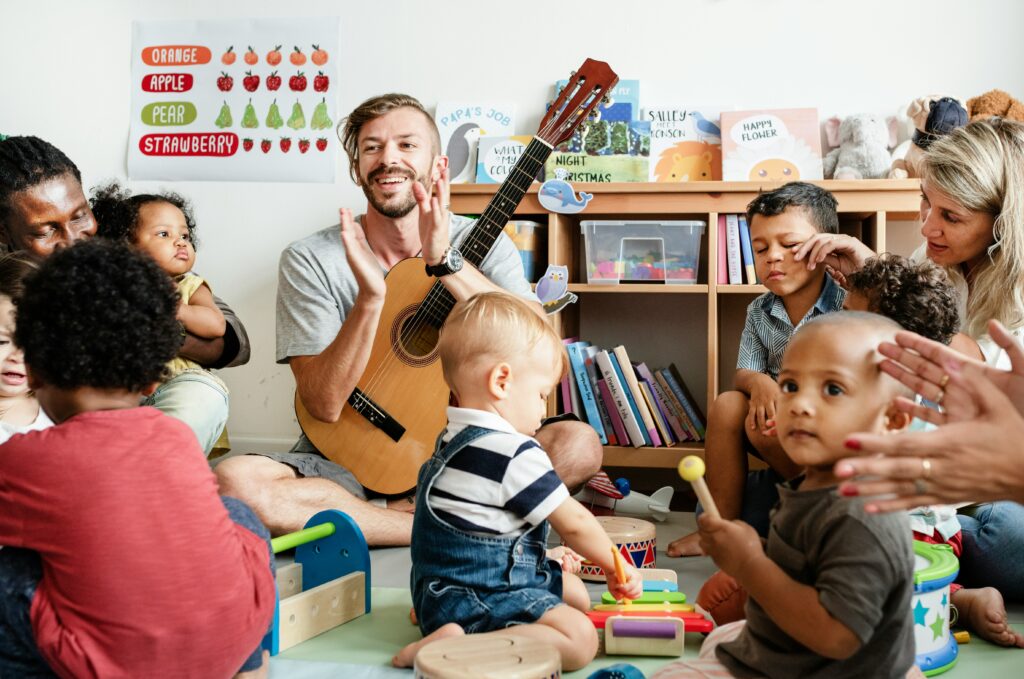
Can you see the connection and how to grow a music school from this need? We can! There is a natural next step between group classes as a stepping stone to private lessons for young beginners. Without both in studio and in home options to “capture” their business, you could be missing out on the opportunity to retain this student for many years.
What to consider when adding an in home music lesson business plan to your studio
Now for the technical side of adding in home lessons to an existing music studio location! How does this all work from the practical side without reinventing your entire infrastructure?
Before making the decision to expand music school services, there are a few things to consider first to determine if this in-home move is right for your business.
- Are you in a busy urban area, or the suburbs of a major city? In the Northern Virginia area where I am now, we are just outside of Washington, D.C. There is a high density of families, as well as both physical music schools and in home providers. This location would be an optimal market for an in home option if you own a music studio. By contrast, my home town of Monroe, Georgia would be absolutely terrible for this option. Though it’s an hour outside of Atlanta, it is rural, and there is no demand for in-home service.
- Are there other in home providers that serve your location’s area now? If yes, this is a good sign. That means there is demand. If there are no in home options at all for your location, and you are in an major city’s greater metro area, this is odd and should be investigated further before assuming there is a market-gap. Always research anomalies.
- Consider the demographics of the area your studio is in. High property values + families = more opportunities for in home lessons. In cities like D.C., Seattle, Atlanta, LA, New York, etc, specific suburbs will have inflated income levels and property values that are well beyond the national average and average for the area. If you are in an area that has high property values nearby that can be easily accessed from your studio, this is another good sign.
If these factors align for your program, this means there is greater opportunity outside of your studio to bring more students in.
Give your music teachers more opportunities to make money!
Next, logistics and staffing are the major technical aspects of this expansion from studio-only lessons to offering both in studio / in home options. For schools that benefit most from adding in home service, you will already have teachers on staff who want more lessons, and they will be your first in home providers.
Logistics for these teachers’ in home schedules will be based on where you point your advertising.
The addition of in home lessons for the right program will generate more ways for their teaching staff to make money immediately. On-location music lessons are always a higher price point than in studio as an industry standard, and with the location overhead removed, teachers can make more from each session.
A common predicament we would hear from teachers we were interviewing for our in-home teaching staff was the experience of contracting with a music studio for a specific day of the week (like Tuesdays are contracted with the school from 1pm – 8pm), but only having one student booked. The remainder of their time was held while their schedule is building up, but for some instruments and studios, this can take months.
Most music teachers cannot wait that long for their income to build while they serve the initial students needed to get to their desired quantity. So they would come to us for an in home schedule to fill in the studio gaps.
Even though we would also need some time to schedule their initial base of students, we combined different strategies to get fast and optimal results. After our process was fully honed, we could build out full time teaching schedules within 2 months, or less.
Many times, our teachers who were working at multiple schools would make the decision to drop their studio lessons to make more room for the in home teaching they were doing. Why? It was more flexible and lucrative.
What if there was a way to keep this from happening for your teachers? You can dramatically improve your staff retention rates by giving them more ways to bring in income.
Remember – retaining teachers is as important to student retention as keeping the students themselves. Students get attached to their teacher! The longer they stay, the longer your students stay.
In home service area starts around the music school and expands organically
As a studio starts their expansion to an in home offering, we recommend music school marketing strategies that increase your sales leads and growth in stages for the very best results.
Start with the students you already serve, or recently served, with advertising by offering the in home service option when it is rolled out. You can also extend this new service to incoming students, and place local advertisements in the immediate community around the store.
Why? This allows you to build the closest logistics and routes for your teachers to travel TO lessons around the store, as well as expanding your reach to the students in your community who are not yet enrolled.
Also, it’s typically cost-effective to advertise locally first and use this opportunity to see what works in your messaging strategy.
Then, gradually increase your radius and reach outwards by considering where your staff members who want in home lessons live. The closest “hot spots” to those teachers is where you should point your efforts next.
Different paid and free advertising sources will allow you to target specific locations to ensure your teachers are not going too far out of the way – very important with in home services, and it can get out of hand quickly if you are not deliberate with location targeting.
What results can I expect with my private music instruction revenue by adding in home services?
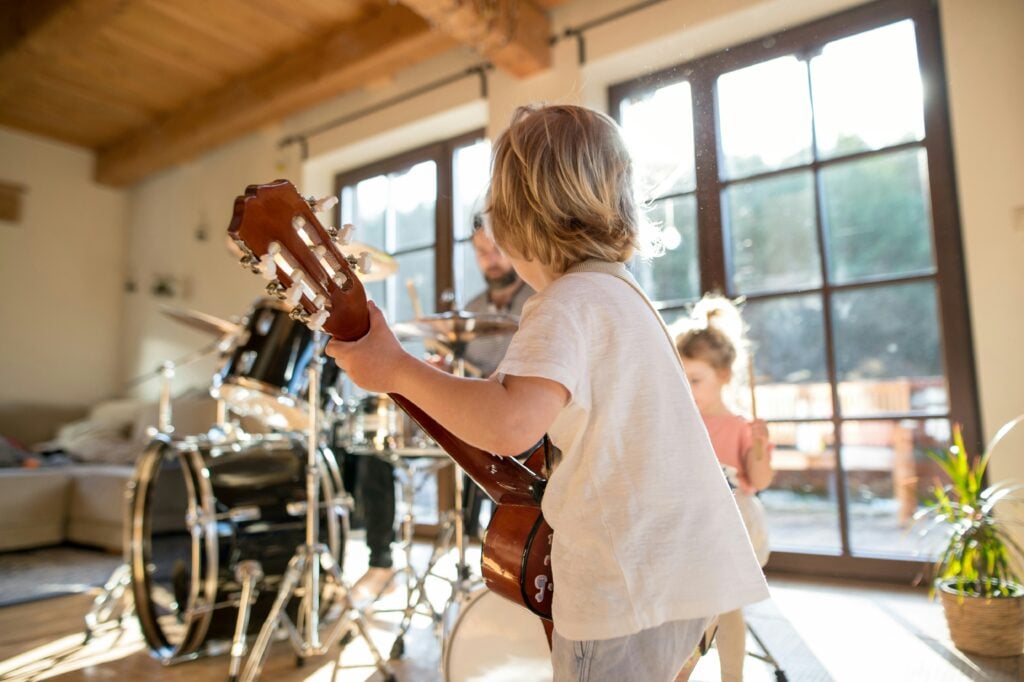
Considering your music studio business growth and the impact of expanding to in home lessons requires insight into the anticipated cost and revenue from this change.
The amazing news – and why it should be a no brainer for those in the most optimal areas for expanding – is that the cost of this addition is almost nothing, if you work in stages.
Of course, you can open the flood-gates, put serious cash behind Google advertising power and Indeed hiring power and get a surge, but the goal is to bolster your studio through the in home option. For musical integrity to stay at the center of your program, rolling out this addition slowly is a better choice, so you can maintain control of the evolution.
Overall, extending in home lessons to your current student base, past students, and incoming students (school age) will typically result in 5-10% of this group moving forward (conservative estimate).
So if you have a list of recently quit students from the past year and inquiries that did not move forward as a list of 300 contacts, you can expect between 15-30 students to sign up. That is straight profit you can then reinvest into developing this offering further.
This audience of previous students and those in your network are such an important marketing base for your school, because they have already expressed interest in your lessons. It costs very little (often nothing) to re-market to them.
But with paid advertising, we had serious, controllable push for in-home leads when wanted. We were seeing 20%-30% conversion rates on average from incoming contact forms, which is even stronger that re-marketing your current base.
Both methods are effective for generating traffic, and yet, planning strategically for the ramp up is needed for the best all-around results for your school AND staff.
Music school owner tips for adding in home services – in conclusion
If you are a music school owner, I hope this article has gotten your wheels turning about the prospect of adding in-home services to your menu of options. It can truly revitalize and accelerate your program, and with the rising cost of overhead for physical locations, this is revenue you need to capture.
I have a few tips for music school owners to consider when adding an on-location option to their menu of services that will help them have the very best experience and success with this undertaking.
- Examine your demographic details and area as a first step to make sure you would benefit from adding in home options to your services
- Consider the amount of staff coverage you have now and if your teachers need / want more work.
- Separate policies for different ways of meeting will be best and will expand your seasonal coverage between offerings
- Group class offerings should promote private lessons and vice versa! The synthesis of the two is where you build your school’s reputation.
- Lastly, pay your teachers MUCH MORE for in home services they give over in studio. At least 60% of what you charge the family.
Of course, this is an informational guide for the music school owner community, and there is much more to explore in every area presented in this piece. Consider this article an overview, as your unique program will require a customized and thoughtful plan.
What I hope you are left with is inspiration for your studio, as well as hope if your revenue is not where you want it to be. Whether you try this exact in-home expansion idea, or some variation, keep working at your vision and the mission. The reward will be great for you and the students and teachers you serve.
Music schools are full of musical artists, and the creative ways we use the opportunities around us is what makes our industry so special. Imagine the ways you can use your facility to create community-wide momentum. It’s the music school owner’s dream!
Needing music teachers and giving lessons will never go away, but the ways we spread the joy of music and educate will evolve. Embrace this shift, and the rewards can be great for you and your staff.
You do not have to figure out in home lessons and music school solutions alone! Creating new service offerings takes planning, new systems, and resources. That’s exactly what we provide for music schools and how we help owners build thriving programs.
Schedule a free discovery call with us to talk about your program and how we can help!