Performance Reviews are Useless: Why Coaching Employees Should Look Like a Music Masterclass (and 6 Steps to Create Your Own)

Coaching Employees will be an ever-present need for companies, but the performance review approach is not a successful method for generating workplace change – or even honest employee feedback. Instead, the methods Music Teachers and artists use for educating groups is a classical training approach that can be adapted beautifully for businesses.
Rarely do the worlds of music education and industry collide in the advice available to business owners, and yet, there is so much enterprise can learn from the arts. Today, we show you how applying the concept of a masterclass approach to team and professional coaching offers an effective solution for uniting a workplace and mission.
The role of the performance review in coaching employees
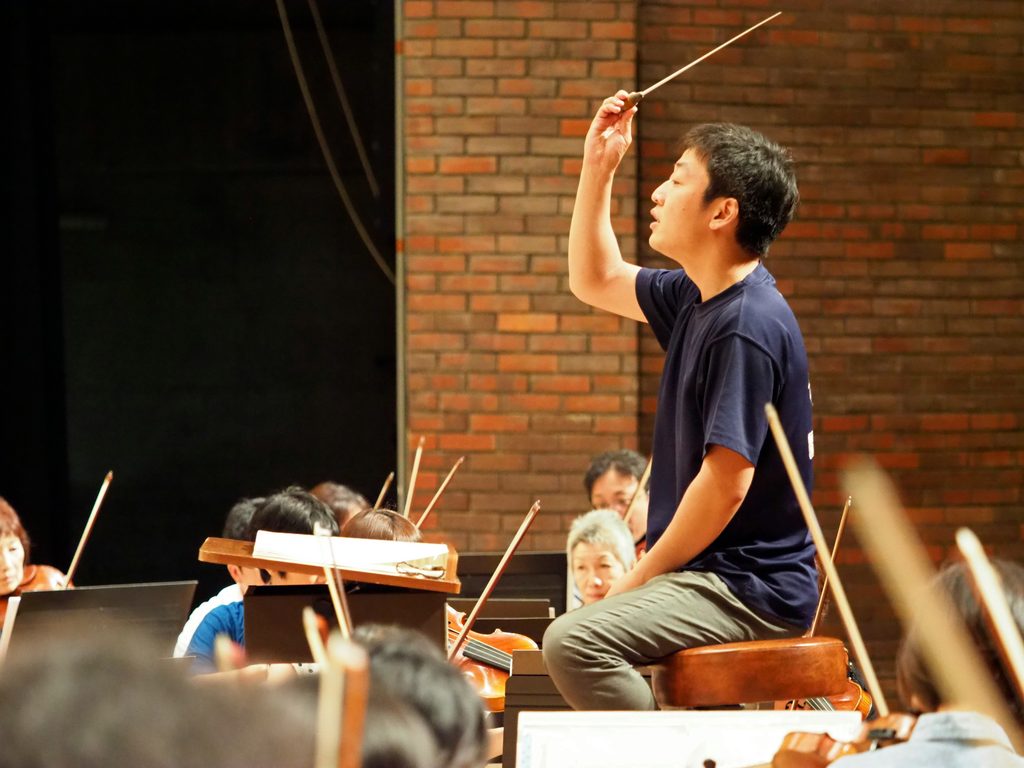
In theory, the method of using performance reviews to generate staff improvement, targeted training, and accountability seems like a very sensible concept. A manager, or the owner / executives overseeing the reviews develop targeted feedback for every worker at expected time intervals (like six months to a year).
Both parties gain insights about the relationship, things that are going well and not, raise concerns, discuss opportunities, and summarize important metrics. All insights and evaluations around an individual’s output culminate into one report. The employee is faced with how well – or not-well – their last six to twelve months was perceived by the company, and they walk away with targeted feedback.
The reason this process feels sound is because these performance reviews seem to provide insights that are concrete through data. Employees are aware of this accountability measure, which leads to the corporate belief that workers will do their best to maintain a standard of performance that is acceptable. There is also an internal pressure that can arise from knowing your performance is being audited as a worker, and this oversight serves as a hidden workflow motivator.
And yet, performance reviews are one of the most ineffective tools available for actually coaching employees and helping them perform their best on the job.
Why are performance reviews ineffective for generating improvement?
Not all ideas translate from concept to application – even when they appear to be strong. Just look at Fyre Fest, or communism. Raygun’s Olympic performance… Point proven.
Performance reviews as a tool for coaching employees have a similar predicament of being “good on paper, not so good in real life”, though it has taken some time for the ineffectiveness to become apparent. The reason these assessments do not work is because data does not tell a story. It’s flat without a bit of context.

Just as a report card does not really create change for a child in school who is struggling, a performance review has around the same function and impact, even when we have a meeting over it.
Sure, it’s great to know how you are measuring against your peers and expectations at work, or how management views your work output – where you stand in your job. But outside of hiring / firing insights for the manager and finding out if you got a raise or not for the employee, is this performance review information even actionable, or the entire picture of the workplace dynamic?
In most cases, we believe the performance review process is useless for coaching employees and seeing where your team really needs help and growth. The max you can find are the people who are deliberately not working, or ‘getting it’ and your stand-out progress-drivers.
The time interval these metrics span within a performance review is typically too late to save a poor-performer, though. As a manager, you already know who your best and brightest are, so having an annual meeting to share this information feels less productive once thought through.
Therefore, the major shortcoming in ‘the performance review’ for helping teams and organizations improve is the lack of actionability and deep insight this audit gives managers. Turns out, it’s not so good ‘tool’ for coaching employees after all.
The data that performance reviews miss
A flat report that is not focused on the “right now” in your organization can tell a different tale than a year of metrics. In business, team dynamics can change quickly and often. Sudden breakthroughs can course correct a history of poor results once the secret to success is discovered.
A performance review can also miss these details and the biggest issues affecting productivity and sales for a team. Those who are crafty at working data to cover their errors can easily manipulate a process like a performance review to their favor. Or, you may have those employees who are similar to students who “study for the test” and are only concerned about positive metrics, not real contribution.
In reality, there could be a number of reasons for a down-turn in half, or a full year for a given individual, as well as strides for those who are ‘working for the grade’ rather than real achievement. Data without context does not reveal much, and yet performance reviews lean heavily on being able to draw big conclusions about team members by checking in once, or twice, a year – by evaluating their KPIs and making a determination.
Training programs for teams and initiatives to improve metrics are typically rolled out for the next year, or season, based on results from these performance reviews. Unfortunately, this training process often compounds the misdirection from these audits even further by working on outdated skills, or those that do not relate to the core issue behind un-ideal metrics management is seeing.
If performance reviews are not working for assessing employee productivity and driving positive results, how should businesses evaluate their team-members and employees?
The masterclass approach to employee performance improvement
Teams are living, breathing units who require interpretation and organic insights based in experience to generate change. As a manager, you cannot receive these subtle insights through a flat report alone. You need context – as mentioned earlier – to bring data to life for your operation and capture the best picture of “where we are right now” versus “how did the last year go?” alone.
Our music education backgrounds as the Founders of AstroCat give us a different perspective on employee feedback methods and the performance review process for coaching employees. We had a chance to experience both sides of the music education business – from working with students ourselves to training our teachers to be successful in maintaining their own private students.
As an organization, the desired goals behind performance evaluations are simply to –
- see which individuals are performing the best on the team
- uncover which individuals are performing the worst
- create ways to generate improvement for everyone forward that benefits the company positively
We had the same need to support our staff of in-home teachers and maintain the quality of our program across our huge operation that other industries face. All 80+ individuals actively teaching on our team by 2026 had to operate like a single unit, though all were remote contractor workers. Without that unity, our brand identity would suffer.
However, our musical backgrounds and style of leadership with our unique business is what led us to the most authentic training solutions for our group, which included the masterclass approach to staff development.
What is a masterclass approach?
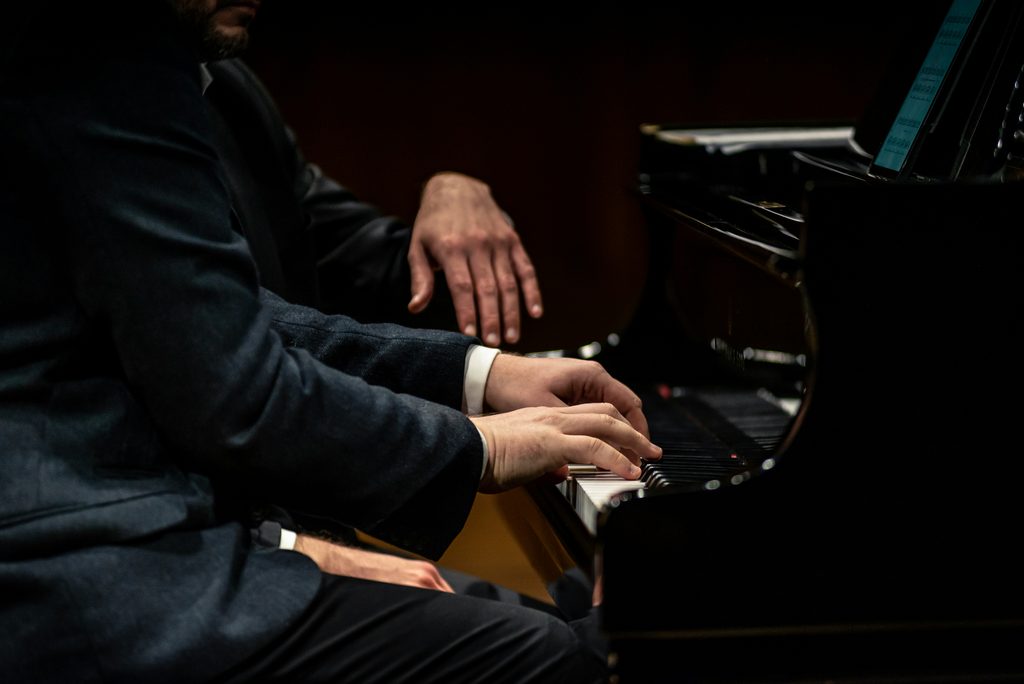
In music education and performance, masterclasses are a special type of learning-based performance presentation that merges group learning and individual learning into one forum.
Here are the key details of how a masterclass for musicians works:
- The “master” of a masterclass is a high-level performer or educator in the field of music, or other discipline
- A masterclass is usually instrument, and / or genre-specific, because it is an educational experience. For example, a masterclass featuring an acclaimed pianist as the ‘master’ would work with piano students performing well-known classical piano literature on stage for the demonstrations.
- The format is typically a performance by a student, or high-level performer that the “master” will be teaching in the presentation. The performer delivers the piece first, so the master can evaluate after.
- After the selection is performed, the master will offer feedback and demonstrations to workshop corrections with the performer in this live setting – similar to a private lesson. The performer demonstrates the applied feedback from the master, and the audience observes.
- The audience in this experience is learning passively by observing this high-level of lesson and how the master guides the corrections for the performance everyone experienced. You learn from what the ‘master’ noticed and how they create improvement.
- Typically, multiple performances and workshop sessions are done in the span of one masterclass. The corrections and lessons are very condensed. We repeat this for another 2-3 performers / selections, typically.
- Performances are typically delivered at a high level by the students participating in the masterclass. Pieces that are not ‘polished’, or ready for performance are not normally shared in this setting.
- Masterclasses allow the participants to gain a window into the real-time work and thought processes the master offers in the presentation.
Attending a piano masterclass, featuring Emanuel Ax
I had the privilege of attending many masterclasses in my day as a pianist and teacher, but one of the stand-out experiences was at Georgia State University, where I completed my music degree. The school of music had a surprise masterclass come up that was led by Emanuel Ax – one of the most well-known classical piano performers today.
I jumped at the opportunity to attend, and just as described, we heard fantastic performances; he offered feedback and high-level guidance the performers that they applied in real time on stage. As an audience member, I had the chance to learn through observing the back-and-forth lesson exchange with Emanuel Ax’s feedback applied.
The audience could hear the results and how his insights positively affected each performance, but also, how he interpreted the same exact performance we all heard and found something greater – a deeper insight – in the material.
Needless to say, masterclasses are an interactive and unique experience. The vast majority of musicians find them very valuable, fascinating, and inspiring.
At the end of a masterclass, the leader of the lecture (i.e. ‘master’) often fields audience questions and provides additional feedback on topics that came up during the performance portion. In the case of attending Emanuel Ax’s masterclass, he kept with this tradition, and it was the most memorable portion of the entire experience. His Q&A at the end contained advice I will always remember and still cite for students today – 20 years later.
The benefits of a masterclass approach for training teams

This masterclass format – taken from the art world – can lend an important training system to all industries in need effective methods for coaching employees. It works universally by honing in on the learning concepts that are the most impactful from this classical training method.
Masterclasses are invigorating to the audience, because attendees have the opportunity to see corrections and modifications put into action in real time. By seeing the performance impact each adjustment has from the ‘master’, both the audience and performer learn a new way of thinking about the same material.
At the core, masterclasses allow you to observe expert problem solving in motion, and this skill has a high educational value in any industry. Both the participant and audience receive this knowledge-asset in different ways, so it has multiple layers of benefit.
Benefit to the performer: they can experience the direct, personalized corrections and will know the material well-enough to apply the feedback. They receive targeted advice from the master.
Benefit to the audience: they receive passive education through observation and seeing the real-time participation in action.
In applying the masterclass approach to business teams, the same model works beautifully for presentations on a topic, completed reports, or any other initiative that is in a stage of ‘completion’ and ready to finalize with formal review from a manager.
For more technical industries, the demonstration of a manual process executed by a highly-skilled team member would be an equally-excellent ‘performance’ to use for masterclass purposes.
In essence, a masterclass is a type of demonstration format, but it works by giving participants and the audience a window into the steps an expert takes to create a solution.
How to create masterclass for your team: 6 steps for coaching employees
Step 1: Select the initiatives to present to the team. The goal is to workshop this skill live in front of everyone, so pick a topic that everyone on the team can relate to and find value in.
Step 2: Select 3 to 4 ‘performance’ examples for the masterclass presentation from your team’s highest performers. Give participants the time and preparation space to take their examples that will be presented to the highest level possible.
Step 3: Schedule a meeting that does not exceed 90 minutes. Capping at one hour is better, but 90 minutes leaves more room for a question / answer session.
Step 4: For the actual masterclass, have each participant present their example to the group. Then, in real-time, offer constructive feedback for the participant to consider. Limit to a 10-15 minute assessment for your feedback. These feedback points should be framed in a kind way always – but especially in front of an audience. No feedback should embarrass the participant.
Step 5: Ask your ‘audience’ to take notes during the presentation, or ‘performance’ of the masterclass. Any questions they have over the guidance can be asked at the end during the Q&A.
Step 6: Invite future participants and make masterclasses a regular occurrence for coaching employees. Every 1-2 months is a good goal for your team to receive continuous training throughout the year. The consistent review and collaboration with masterclasses that allow every team member to ‘have a turn’ will spread this attention across your entire staff.
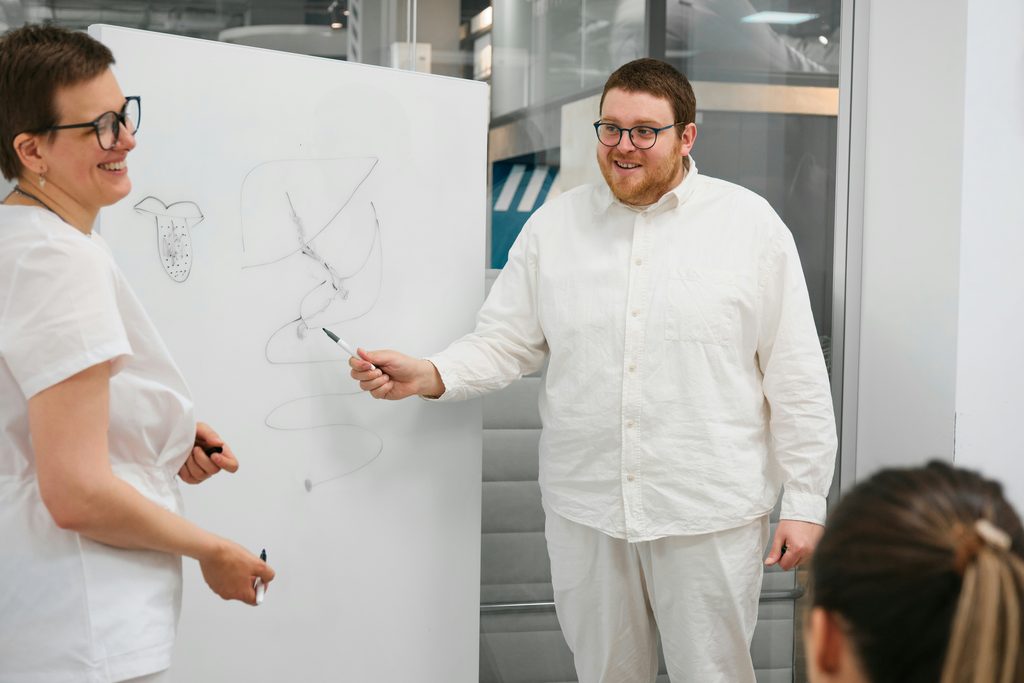
The masterclass approach as a performance review alternative
Getting back to performance reviews and how to coaching employees for improvement effectively – masterclasses are an ongoing initiative that actually does work for generating improvement in an organization. Unlike performance reviews, which are flat and data-based, the masterclass approach is an active, insight-driven process where applied skill and learning problem-solving methods are prioritized.
Another major aspect of the masterclass approach that makes it so effective for musicians is the very specific environment created. Masterclasses are out in the open and require both the ‘performers’ and ‘audience’, to play a specific role in the process.
When applied to the business world and non-arts industries, managers are able to collect key insights about the current state of their team members they oversee through masterclasses. When working together regularly – every one to two months for masterclasses – teams have an opportunity to build a collective expectation for what defines ‘good performance’, outside of chasing metrics. We celebrate the strong thinking skills as the priority, and positive metrics are the natural result of strong processes.
There is a social and team-building benefit to masterclass-approach training too. The community built through a shared masterclass experience allows team-members to grow closer and learn from one another along the way.
Each team member starts to see how they each carry different responsibilities and how they can help each other on the same, or different tasks. A shared reciprocity forms where accountability means more than completing a certain number of calls each week, or processing a certain number of leads. These teams have a chance to look inside the ‘how to’ of different processes and learn more when there is still an opportunity to make an improvement.
Employee feedback methods in the masterclass approach
I mentioned giving constructive feedback in the masterclass setting is important to avoid any negativity felt by participants, and this is true for any feedback method you select for your team. This is another area where performance review alternatives – like our masterclass approach – provide benefit to the end results your team experiences.
Performance reviews as an idea can feel intimidating and even negative. Consider the worker going in for a review with their bosses: unless they are very confident their metrics will be stellar, there is some level of performance worry that will emerge – and about the past, which the individual up for review has no power over in the moment.
This stress is unproductive and negative, even if everyone goes through it with a performance review. It’s a stress of upcoming judgement mixed with powerlessness the worker feels in the moment if they have any worry over a review meeting.
By contrast, a constructive review approach, like conducting masterclass style presentations, is an on-the-job form of training that is both productive and social. It’s a moment of working together that can be rare in the modern office environment where everyone connects in small groups, or one-on-one by topic – not as a way to see what each other are working on.
Working together is normally a positive experience and where any constructive feedback will feel actionable. While performance review feedback is about the past, masterclasses are about ‘what’s next’ and ‘the next time you perform this…’ There is already a forward motion behind the change that motivates a participant into action.
Create your first masterclass for your team!
The masterclass concept is very easy to roll out for any team, and we encourage you to give it a try for your organization! The idea of presenting a day to day concept and finished product is easy to do for any industry – even service businesses! Rather than sharing a completed work product, or creative asset, share a set of steps in action. Or you can workshop sales, customer service, and challenging situation scripts through play-acting through familiar scenarios together.
Consider the preparation your team presenting will need to do to have the highest level of ‘performance’, and take time to review everything with the participants ahead of time to have the smoothest delivery.
Invite questions from the team at the end, and encourage dialogue! You won’t be surprised to find that a lot of questions actually come up after the presentation from those who may have been too shy to speak up on the spot, and that’s okay!
When these dialogues around how to improve work output are opened, you have achieved success with your performance review process that data alone cannot offer.
Your challenge: separate training and performance audits for your employees
Most likely, performance reviews are not hurting your business as a concept – they just aren’t helping at all. If you are relying on these reports for informing decisions, they could be leading to unproductive results.
Having set intervals to review compensation and other annual details are part of the needs your employees have too, but very likely, a performance review will not help with more than that.
Our challenge to you as a business owner, or executive, is to consider if reviewing work output data and extended performance metrics actually belong together in the same conversation – at all. Remember, it’s too late for your employee to do anything about the work performance side in these meetings.
As a performance review alternative, consider recurring masterclass-style trainings for your team that happen 6 to 12 times per year as a starting point. Then, you can add more sessions to the calendar if you find masterclasses to be effective for your team.
In these sessions, performance of the team is regularly evaluated and worked on as a group. Those who are diverging and unable to keep up with the expected performance will reveal themselves faster, so a greater solution can be reached for their position, or continued roll. As a business, you can make these staffing decisions faster to strengthen your team.
Then, when it is time to do an annual review, performance metrics are not in the conversation. It’s an HR-related meeting that states the upcoming rate of pay for the next year and any housekeeping items that need to be completed for employment, or contract purposes.
But in this meeting, there is no pressure from the connection between work performance and compensation, because it is not needed at this point. A team member will already be aware of their performance status with the organization and how that may factor in to any executive-level decisions regarding their future with the company.
We challenge you to try this process for your team and notice the results! You will find your employees will be more motivated to achieve real growth versus superficial metrics.
Need staff training solutions that work? Look no further! Book a free discovery call today through our contact form. We will share a custom plan of action to strengthen and develop your team training and growth!